Why it exists
The project was built to experiment with Google AI Mode from a local, scriptable environment without depending on paid scraping providers or unofficial third-party services. Instead of presenting browser automation as a fragile hack, it wraps it behind a small HTTP API that can be controlled locally and inspected through a web interface.
Project media
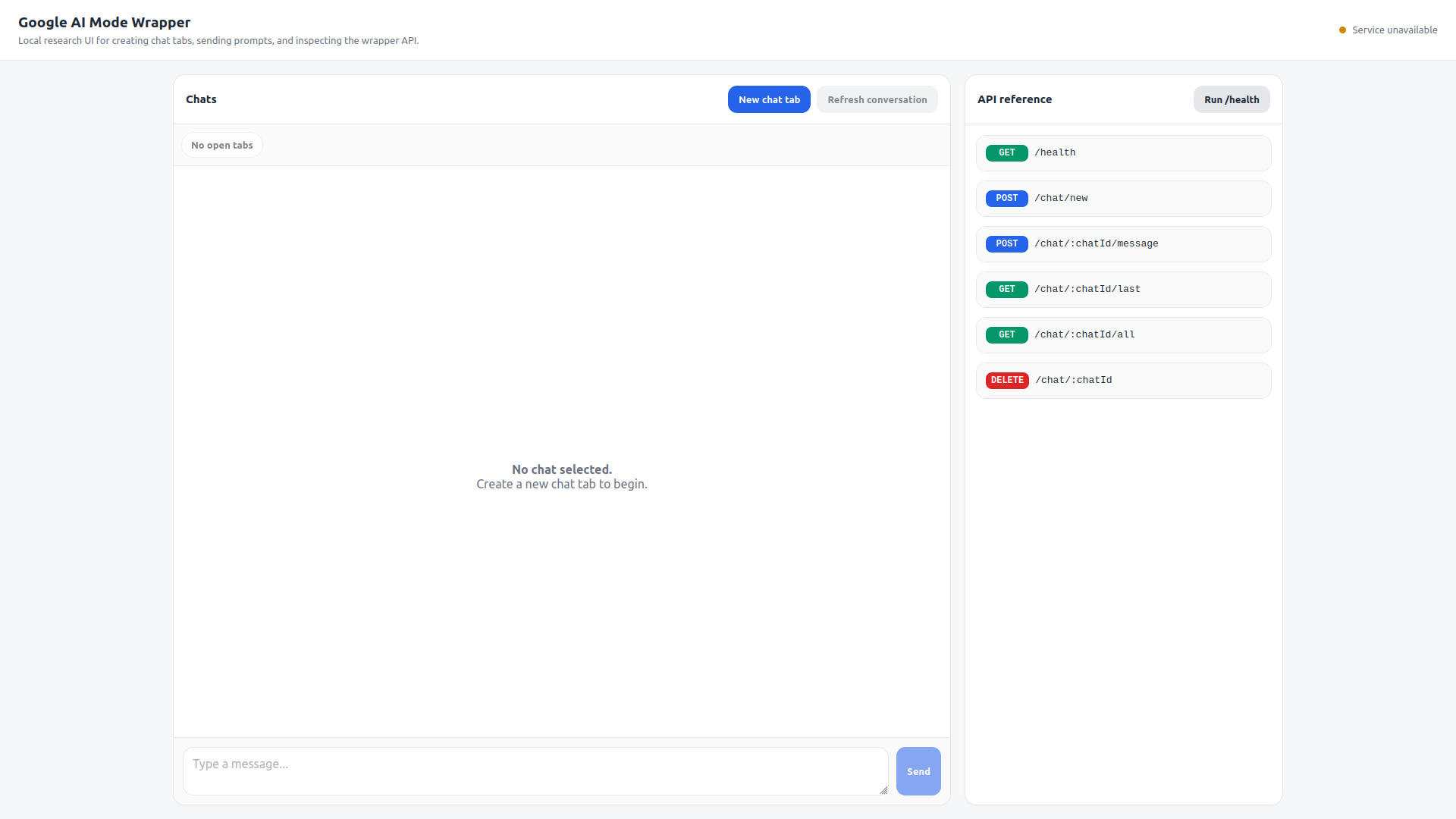
Architecture
- A client or local web UI sends requests to an Express server.
- The server manages chat sessions and delegates browser interactions to a Playwright client.
- Playwright controls Chromium and interacts with the Google AI Mode web interface.
- Configuration is exposed through environment variables for port, headless mode, locale, timezone and optional user agent.
- Docker support makes the whole stack reproducible on a local machine.
Key features
- Local HTTP API and web UI.
- Multiple chat sessions.
- Docker Compose quick start.
- Health endpoint and API endpoint discovery.
- Configurable browser locale, timezone and headless mode.
- Explicit warning against public exposure without authentication and access controls.
Design decisions
The interesting part is not simply automating a browser, but drawing a clean boundary around an unofficial integration. The project keeps the API local-first, documents its security assumptions and makes the fragility of DOM-driven automation explicit instead of hiding it.